运营 · 3 分钟阅读
FNSKU-level operations beat ASIN-level guessing
Wholesale and private-label sellers need FNSKU-level control for fees, stock, prep, returns, and reimbursements. ASIN averages hide too much.
作者: Kenderson Tripaldi · May 8, 2026
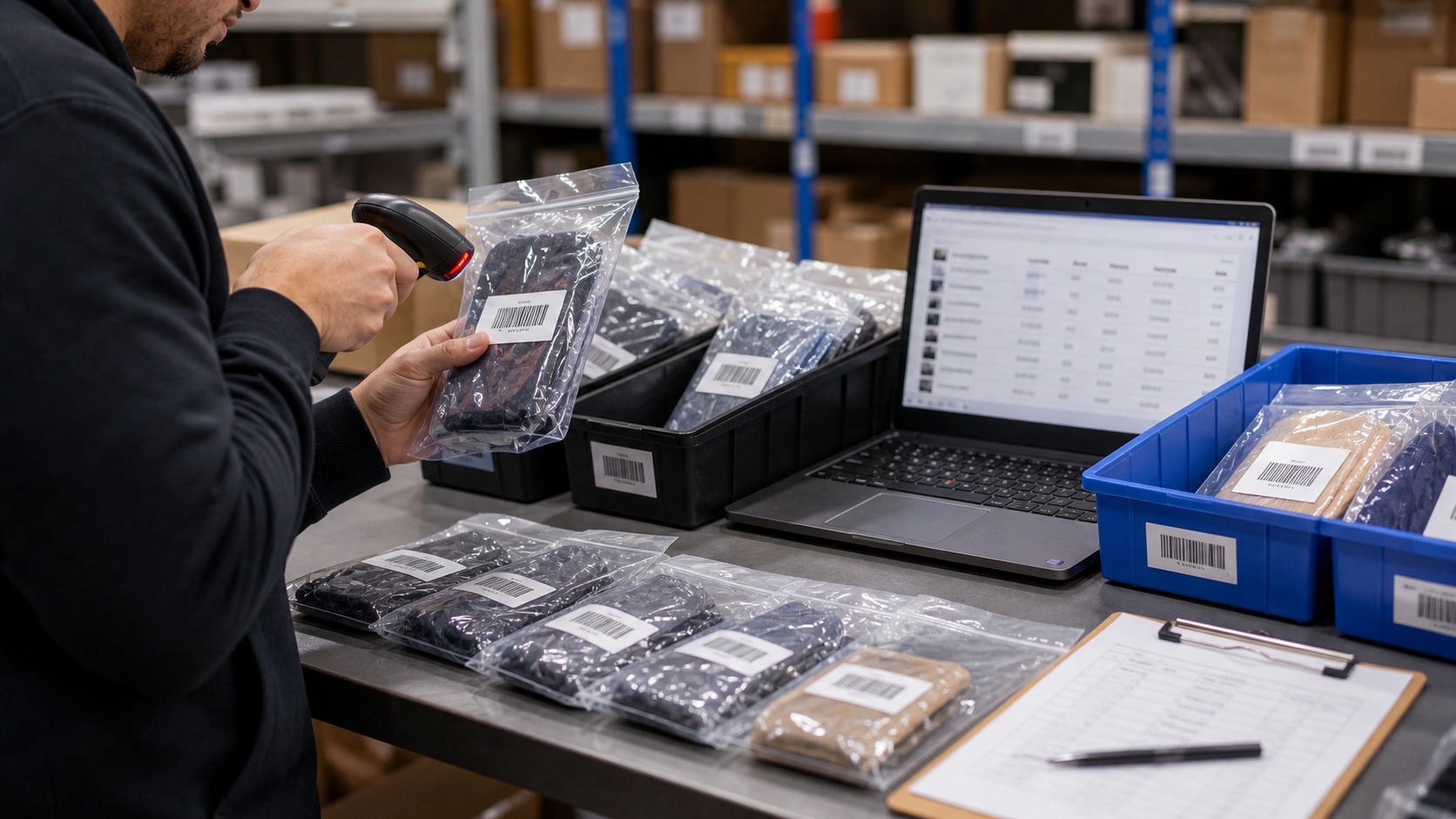
ASIN-level reporting is useful for market analysis. It is not enough for operations. FBA work happens at FNSKU level: the physical unit, the fulfillment channel, the prep rule, the cost basis, and the reimbursement evidence all attach to a specific seller-owned inventory identity.
This matters most for wholesale and arbitrage sellers who may share an ASIN with other sellers. It also matters for private-label sellers with bundles, multipacks, regional offers, or packaging revisions.
Where ASIN averages fail
An ASIN can have multiple FNSKUs with different cost basis, prep requirements, inbound dates, storage age, and reimbursement evidence. If you average them together, you can make the wrong decision: replenish a lot that is actually unprofitable, miss a claim on one FNSKU, or apply the wrong prep rule to new units.
Build FNSKU operating records
Track cost, supplier lot, prep rule, inbound plan, received quantity, available quantity, returns, removals, claims, and current fee assumptions by FNSKU. Roll up to ASIN for marketplace decisions, but keep the operating record granular.
Use FNSKU in exception queues
Fee anomalies, stranded inventory, missing units, and return discrepancies should all point to the FNSKU. That lets the owner find the evidence quickly and prevents a fix on one offer from being mistakenly applied to another.
FNSKU-level control is not extra detail for its own sake. It is how an FBA seller connects marketplace performance to physical inventory and recoverable dollars.
Preserve lot economics
Wholesale and arbitrage sellers often buy the same ASIN at different costs on different dates. If those units are blended, the team can misread margin and make a bad replenishment or liquidation decision. FNSKU-level cost basis keeps lot economics visible. A high-cost lot may need a different price, a faster recovery plan, or a lower acceptable storage window than a cheaper lot on the same ASIN.
This also matters for reimbursements. If Amazon reimburses based on a cost record that does not match the affected units, the seller may accept an underpayment without noticing. The evidence should tie the claim to the correct FNSKU and cost basis.
Keep prep and returns granular
Prep rules can differ between packaging revisions, bundles, and supplier lots. Return outcomes can differ too. One FNSKU may come back damaged because of old packaging while another performs cleanly. ASIN-level averages hide that pattern and can lead the team to change the wrong process.
Use FNSKU in warehouse screens, exception queues, and finance reviews. Roll up when making marketplace decisions, but keep the operating truth granular enough to act.
Link FNSKU to evidence
Every exception should point to the evidence for the affected FNSKU: inbound plan, box contents, supplier lot, cost record, prep instruction, return condition, and reimbursement case. When those records are attached at ASIN level only, operators have to reconstruct which physical units were affected. That slows claims and increases the chance of filing with the wrong support package.
Evidence linkage is also useful for prevention. If one FNSKU produces damaged returns and another does not, the issue may be packaging revision or supplier lot, not the ASIN itself. Granularity lets the team fix the actual problem.
Rollups still matter
FNSKU detail should not prevent strategic rollups. Use ASIN and parent-level views for demand, pricing, and catalog decisions. Use FNSKU views for operations, evidence, and cost basis. The discipline is knowing which level of truth fits the decision in front of the team. When the level is wrong, the team either misses the cause or drowns in unnecessary detail. Make the reporting level explicit in every queue so operators know where to act. That small label prevents many false fixes.
继续阅读
相关文章

运营 · 3 分钟阅读
The weekly FBA recovery rhythm that protects margin
A simple weekly cadence keeps fee anomalies, stranded inventory, reimbursements, returns, and removals from becoming month-end surprises.

运营 · 3 分钟阅读
Private-label and wholesale sellers need different FBA workflows
Private-label sellers optimize replenishment depth. Wholesale and arbitrage sellers optimize lot control, buy decisions, and fast recovery.

仓库 · 3 分钟阅读
Multi-location stock control for FBA sellers
FBA sellers with prep centers, warehouses, and Amazon stock need one reservation model. Without it, inbound plans overpromise units.